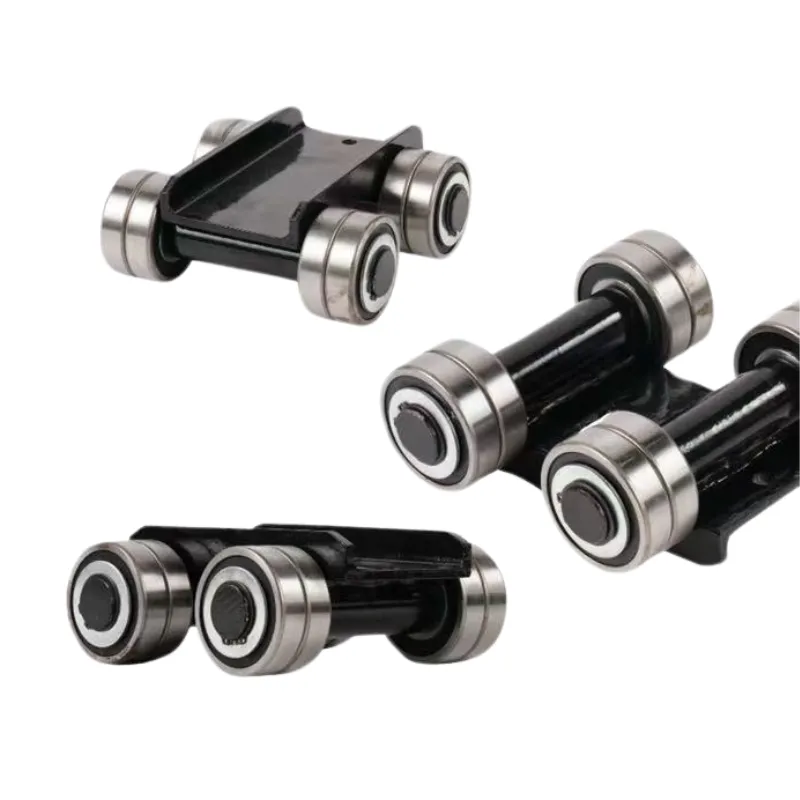
Heavy Duty Machinery Mover Compatible with Factory Gantry Crane
Moving heavy industrial machinery requires a precise balance of structural integrity and operational agility. The Dawei 180° Machinery Mover is engineered to address the critical challenge of repositioning oversized equipment within tight factory footprints. Unlike static lifting solutions, this system allows for fluid, multi-directional movement, significantly reducing the manpower and time typically required for plant reconfiguration or equipment maintenance.
Designed for high-load environments, the mover utilizes thickened steel plates and specialized polyurethane rollers to ensure stability across diverse flooring types, from polished epoxy to industrial cement. By integrating this tool into your material handling workflow, operations managers can mitigate the risks associated with manual heavy lifting while maximizing the precision of machinery placement.

Engineering Excellence in Heavy-Duty Material Displacement
The core of the Dawei Machinery Mover's performance lies in its material composition. Constructed from high-grade Q235B steel plate, the chassis is designed to withstand immense static pressure without deformation. This choice of material ensures that the mover maintains a low profile while offering a massive bearing capacity, making it an essential companion for those utilizing a factory gantry crane for initial lifts before transitioning to horizontal transport.
One of the standout technical features is the integration of silicone resin wheels. These rollers are specifically engineered to provide high pressure resistance while protecting the underlying floor surface from scratches or oil pollution. Because the sliding wheels are equipped with a protective rubber layer, they increase friction for stability while ensuring the cargo does not slip during transit. This combination of forged steel and advanced polymer science results in a tool that is virtually maintenance-free.
- Structural Rigidity: Thickened forged steel plates prevent bowing under extreme loads.
- Floor Protection: Polyurethane and silicone resin rollers prevent damage to epoxy coatings.
- Operational Efficiency: 180° rotation capability allows for complex maneuvering in narrow aisles.

Operational Safety and Load Distribution Logic
Safety in heavy lifting is not an afterthought; it is built into the static load specifications. The Dawei mover is tested to ensure that the static load is more than twice the rated load, providing a critical safety buffer for industrial users. This ensures that even if there are slight imbalances in the load distribution, the structural integrity of the mover remains uncompromised.
To achieve optimal results, the product is supplied as a group of four pieces. By placing one mover at each corner of the machinery or container, the weight is distributed evenly across four points of contact. This prevents the concentration of stress on any single area of the floor and ensures the load remains level. When paired with a professional jacking tool, the transition from the floor to the mover is seamless, drastically shortening the working cycle for equipment relocation.
Practical Application Scenarios and Deployment
The versatility of the Dawei 180° Mover makes it suitable for a wide array of sectors, including automotive manufacturing, logistics hubs, and port operations. In scenarios where heavy CNC machines or large industrial boilers need to be shifted for maintenance, these movers eliminate the need for expensive, oversized forklifts that may not fit in the workspace.
For effective deployment, users must ensure the load is centered and secured with a restraining device before initiating movement. The vertical loading angle is paramount; ensuring the cargo is placed perpendicularly prevents rollover risks. Whether handling medium-sized components or massive heavy-duty containers, the ease of operation—combined with the optional control lever—allows a small team to perform tasks that previously required extensive crews.
Technical Specification and Application Matrix
| Feature Dimension | Material Standard | Surface Compatibility | Safety Factor |
|---|---|---|---|
| Main Chassis | Q235B Forged Steel | Industrial Grade | 2x Rated Load |
| Roller Material | Polyurethane/Silicone | Epoxy / Cement | High Resistance |
| Rotation Angle | 180 Degree | Multi-directional | Stable Pivot |
| Maintenance Level | Zero/Low | All-weather | CE Certified |
| Load Distribution | 4-Piece Set | Flat/Level Ground | Balanced Center |
Evaluating Heavy Mover Quality for Procurement
When procuring machinery movers, the primary focus should be on the quality of the steel and the durability of the rollers. Many low-cost alternatives use thin-gauge steel that can warp under load, potentially leading to catastrophic failure. Dawei's commitment to using thickened plates and CE-tested components provides the reliability required for high-stakes industrial environments.
Procurement managers should also consider the "hidden costs" of maintenance. A mover that requires frequent lubrication or wheel replacement increases operational downtime. Because the Dawei system utilizes a simple, robust design with maintenance-free wheels, the total cost of ownership is significantly lower. This makes it a strategic investment for facilities that prioritize long-term reliability over short-term cost savings.
Strategic Integration with Lifting Workflows
The most efficient material handling systems combine vertical lifting with precision horizontal moving. By integrating machinery movers with other lifting equipment, such as manual hoists or a factory gantry crane, companies can create a comprehensive "Lift-Shift-Place" workflow. This synergy reduces the reliance on heavy vehicle traffic inside the plant, increasing overall safety and reducing floor wear.
Looking forward, the trend in material handling is moving toward "lean movement"—reducing the time and energy spent shifting assets. The Dawei 180° Mover supports this by providing the agility to turn heavy loads in tight spaces. As factories become more modular and flexible, the ability to rapidly reposition machinery without dismantling the entire production line becomes a significant competitive advantage.
Frequently Asked Questions About Machinery Movers
What is the primary benefit of the 180-degree rotation feature?
The 180-degree rotation allows the operator to change the direction of the load without having to lift the machinery again. This is critical in narrow factory aisles where there is no room to turn a traditional straight-line mover.
Can these movers be used on epoxy-coated floors?
Yes, the polyurethane and silicone resin rollers are specifically designed to be non-marking and gentle on epoxy floor paint, preventing scratches and oil pollution while maintaining high load capacity.
How should the movers be positioned under a heavy load?
The movers are supplied as a set of four. They should be placed exactly at the four corners of the object to ensure the weight is distributed evenly and the center of gravity remains stable.
Is specialized maintenance required for the wheels?
No, the product is designed to be maintenance-free. The rollers do not require lubrication, and the rubber-layered surface is built for long-term durability in industrial settings.
What are the safety precautions during the moving process?
Users must never exceed the rated capacity, only operate on hard and level surfaces, and ensure the load is centered and secured with a restraining device to prevent tipping.
Does the product meet international safety standards?
Yes, the product has passed the CE test, and the design incorporates a static load safety factor of more than twice the rated load to guarantee operational security.
Technical References and Industrial Standards
- ISO Standards for Material Handling Equipment
- OSHA Guidelines for Safe Lifting and Moving
- European Commission CE Marking Directives
- ASME B30 Standards for Lifting Equipment
For enterprises looking to optimize their internal logistics, the Dawei Machinery Mover provides a reliable, safe, and efficient solution for the most demanding heavy-load challenges.
Related Lifting Solutions