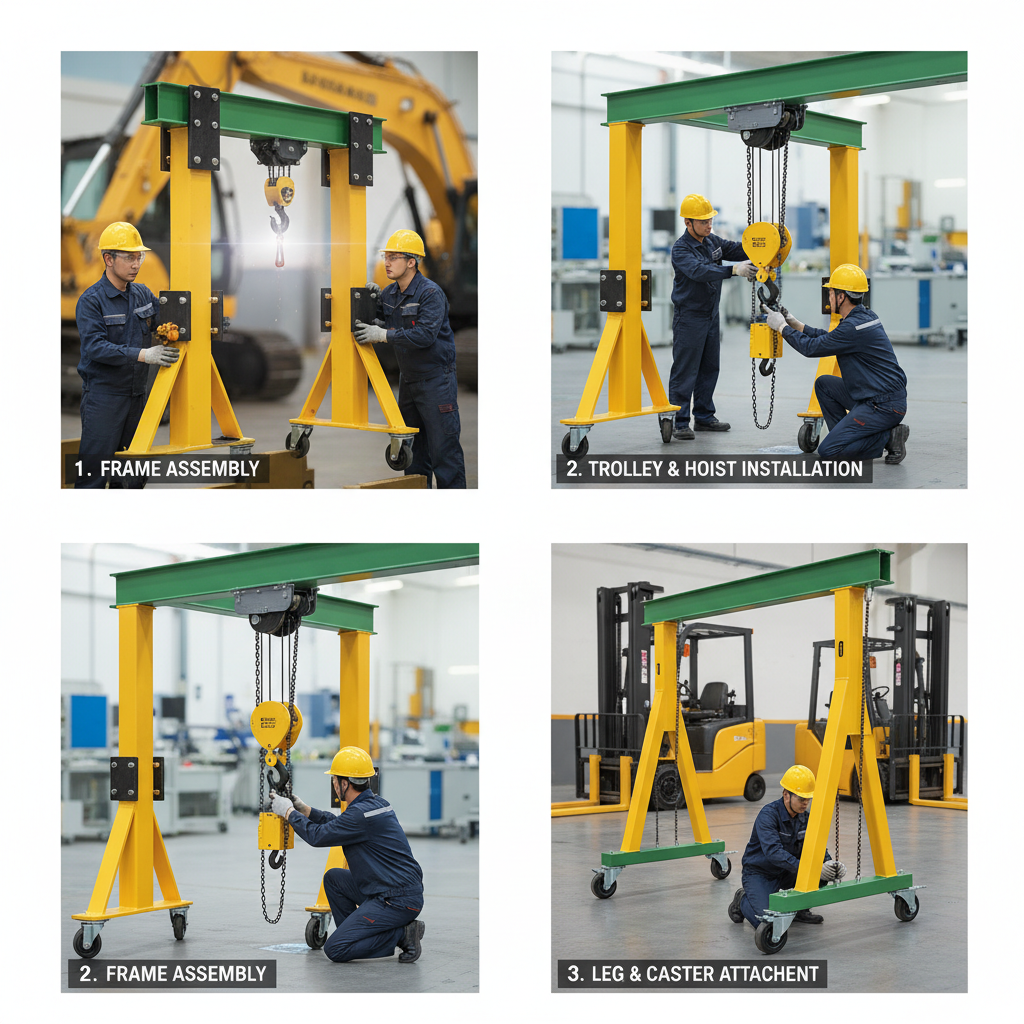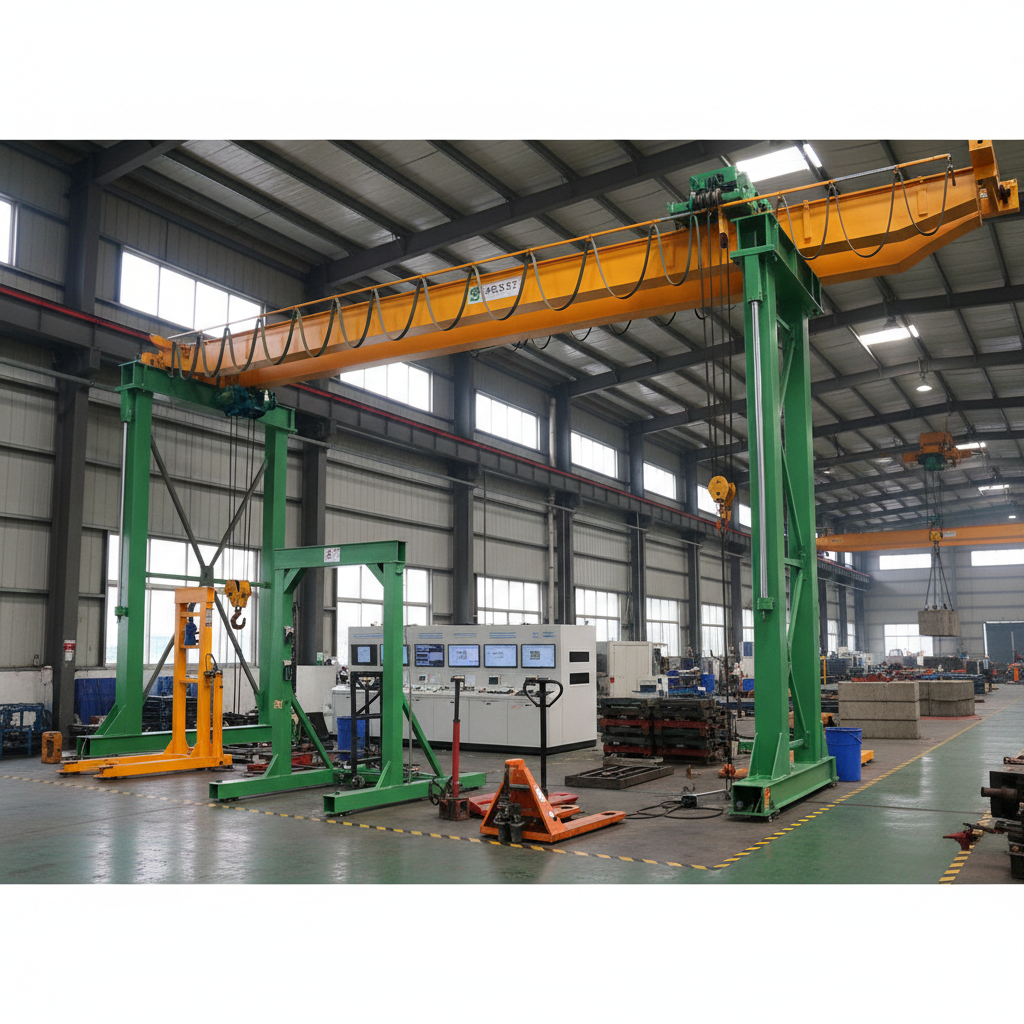
In the heavy machinery sector, procurement managers often struggle to balance initial capital expenditure with long-term operational reliability, making the analysis of gantry price a critical exercise in Total Cost of Ownership (TCO). Rather than looking at a simple sticker price, industrial engineers are increasingly focusing on the material grade and load-bearing safety margins that dictate the actual cost-per-lift over the equipment's lifecycle.
The complexity of pricing in material handling equipment arises from the diverse range of operating environments—from polished epoxy warehouse floors to rugged cement industrial pads. When technical specifications like polyurethane roller durability or steel plate thickness are overlooked in favor of lower upfront costs, the result is often increased downtime and heightened safety risks during the movement of heavy machinery.
This analysis examines the engineering drivers behind lifting equipment costs and provides a framework for evaluating high-performance machinery movers. By understanding the relationship between material science and load stability, buyers can optimize their investment in solutions provided by specialists like Dawei Hoisting.


The core functionality of a machinery mover relies on the distribution of static and dynamic loads across a reinforced base. By utilizing forged steel plates, such as the Q235B grade, manufacturers ensure that the chassis does not deform under extreme weight, which is a primary factor influencing the gantry price.
The integration of 180° rotation capabilities allows for precise maneuvering in tight industrial corridors, reducing the need for multiple repositioning cycles and significantly lowering labor costs.
Material selection is the most impactful variable in lifting equipment performance. The use of silicone resin and polyurethane for rollers is not merely for mobility; these materials are engineered to resist pressure while protecting sensitive surfaces like epoxy paint, preventing costly floor damage during heavy transports.
Thickness of the steel plate directly correlates to the rated load capacity. A thickened plate ensures that the center of gravity remains stable, which is vital when handling asymmetrical machinery where the weight distribution may not be perfectly centered.
Furthermore, the requirement for CE certification ensures that the equipment meets international safety standards, providing a verified benchmark for static load testing—often requiring the tool to withstand twice its rated capacity.
Engineering a safe lift requires a strict adherence to vertical loading angles. When a load is not perfectly centered, lateral forces are introduced that can lead to structural failure or rollover, regardless of the initial gantry price paid.
Professional operators utilize jacking tools in conjunction with a group of four movers placed at the corners of the object. This configuration transforms a high-risk lift into a controlled movement process, optimizing the work cycle and reducing human error.
To evaluate the value proposition of different lifting configurations, engineers use normalized scores to compare maintenance requirements against load capacity. A system that requires zero maintenance, such as those using rubber-layered sliding wheels, offers higher long-term value.
The following assessment shows the relative performance of various material handling profiles based on engineering ratings for durability and ease of operation.
Representative engineering scenarios include the relocation of heavy CNC machines within a manufacturing plant. In these cases, the equipment must operate on hard, level surfaces to maintain a vertical load angle and prevent rollover.
Integration with other tools, such as hydraulic claw jacks or lift tables, allows for a seamless transition from lifting to horizontal transport. This workflow reduces the overall working cycle and minimizes the number of personnel required for heavy-duty moves.
The industry is shifting toward modular lifting systems that can be quickly adapted to different load sizes. We are seeing an increased demand for high-bearing force materials that provide better oil resistance and floor protection, moving beyond standard steel.
Future engineering requirements will likely focus on integrating smarter load-sensing technology into manual movers to alert operators when the load is off-center, further mitigating the risk of accidents.
As logistics hubs expand, the need for "small volume, heavy load" equipment becomes paramount, driving the development of more compact, high-density forged steel components.
When evaluating the gantry price against performance, buyers should use a standardized matrix. This allows for an objective comparison between basic and high-duty configurations.
The following table outlines the technical trade-offs associated with different equipment profiles used in material handling.
It is essential to match the configuration to the specific ground environment—such as cement versus epoxy—to ensure the wheels do not degrade prematurely.
| Configuration Profile | Material Specification | Operating Factor | Recommended Use Case |
|---|---|---|---|
| Basic Configuration | Standard Steel Plate | Low-Frequency Move | Light Machinery Relocation |
| Standard Configuration | Q235B Forged Steel | Moderate Duty | General Factory Maintenance |
| High-Duty Configuration | Thickened Steel + PU | Continuous Operation | Heavy Equipment Logistics |
| Precision Configuration | Silicone Resin Wheels | Surface Sensitive | Epoxy Floor Environments |
| Maneuverable Profile | 180-Deg Rotation | Tight Space Navigation | Narrow Industrial Aisles |
| Industry Baseline | CE Certified Steel | Safety Compliant | Regulated Industrial Sites |
The use of high-grade forged steel, such as Q235B, increases the structural rigidity and prevents bending under extreme static loads. While this may increase the initial gantry price, it ensures that the equipment can safely handle rated loads of 6,000kg to 12,000kg without deformation, which is critical for preventing catastrophic failure during heavy machinery movement.
Polyurethane and silicone resin wheels are highly recommended for epoxy floors. These materials provide high pressure resistance while maintaining a soft enough contact surface to prevent scratching or peeling the floor paint. Unlike hard metal wheels, they absorb vibrations and protect both the ground and the transported machinery from impact shocks.
This is a critical safety margin. In real-world applications, loads can shift or experience dynamic surges. By ensuring the equipment can withstand twice its rated load in a static state, manufacturers provide a buffer that accounts for these fluctuations, significantly reducing the risk of structural collapse and ensuring operator safety.
For asymmetrical loads, it is vital to center the load across the four movers. Operators should calculate the center of gravity and adjust the positioning of the movers to ensure the weight is distributed evenly. Loading must always be done at a vertical angle to prevent the load from sliding or causing a rollover during transport.
High-quality machinery movers featuring rubber-layered sliding wheels and forged steel plates are generally maintenance-free. Because they lack complex gear systems or hydraulics in the base, they do not require lubrication. The primary maintenance is simply ensuring the rollers are clean of debris to maintain smooth movement across the floor.
No, the metal structure of the mover must never be altered. Any drilling, welding, or cutting of the forged steel plate can compromise the structural integrity and void the safety certifications (such as CE). If a specific fit is required, operators should use a load restraining device or a custom adapter plate that sits on top of the mover.
Evaluating the gantry price requires a shift from procurement-led thinking to engineering-led analysis. The true value of lifting equipment is found in the intersection of material grade, safety margins, and operational versatility. By prioritizing reinforced forged steel and surface-appropriate rollers, companies can reduce their total cost of ownership while maximizing workplace safety.
For those managing heavy-duty industrial relocations, investing in a high-capacity, CE-certified system ensures that machinery can be moved efficiently across diverse ground environments. Solutions like those from Dawei Hoisting provide the necessary reliability to handle everything from medium-sized components to heavy industrial containers with minimal risk and zero maintenance.