Procuring a 1-ton lifting system often leads buyers to a complex crossroads where initial expenditure clashes with long-term operational safety. For many small-to-medium enterprises, the search for a 1 ton overhead crane price is not just about finding the lowest number, but about understanding the total cost of ownership.
The market for light-duty hoisting equipment has shifted toward modularity and specialized versatility. Rather than installing massive, permanent structures, many facilities are now integrating targeted lifting solutions that balance structural rigidity with ease of installation, reducing both the upfront capital requirement and the associated infrastructure costs.
Navigating these options requires a technical understanding of how load capacity, span, and hoist type influence the final quote. This guide examines the variables that dictate pricing and the strategic frameworks for selecting a 1-ton system that maximizes workshop efficiency.


The pricing of 1-ton overhead systems is primarily driven by the materials used in the girder and the specification of the hoist unit. High-tensile steel reduces the overall weight of the structure without compromising safety, which can lower shipping costs and installation time, though the material itself may command a premium.
Furthermore, the distinction between manual and electric operation creates a significant price gap. While manual chain hoists are budget-friendly and ideal for infrequent lifts, electric wire rope hoists increase the initial investment but drastically reduce labor costs and improve cycle times in high-throughput environments.
Beyond the capacity, the span—the distance between the supporting rails—is a critical cost factor. As the span increases, the girder must be deeper or reinforced to prevent deflection under load. A 1-ton crane with a 5-meter span will be priced differently than one with a 10-meter span due to the increased volume of steel and the need for more rigorous stress analysis.
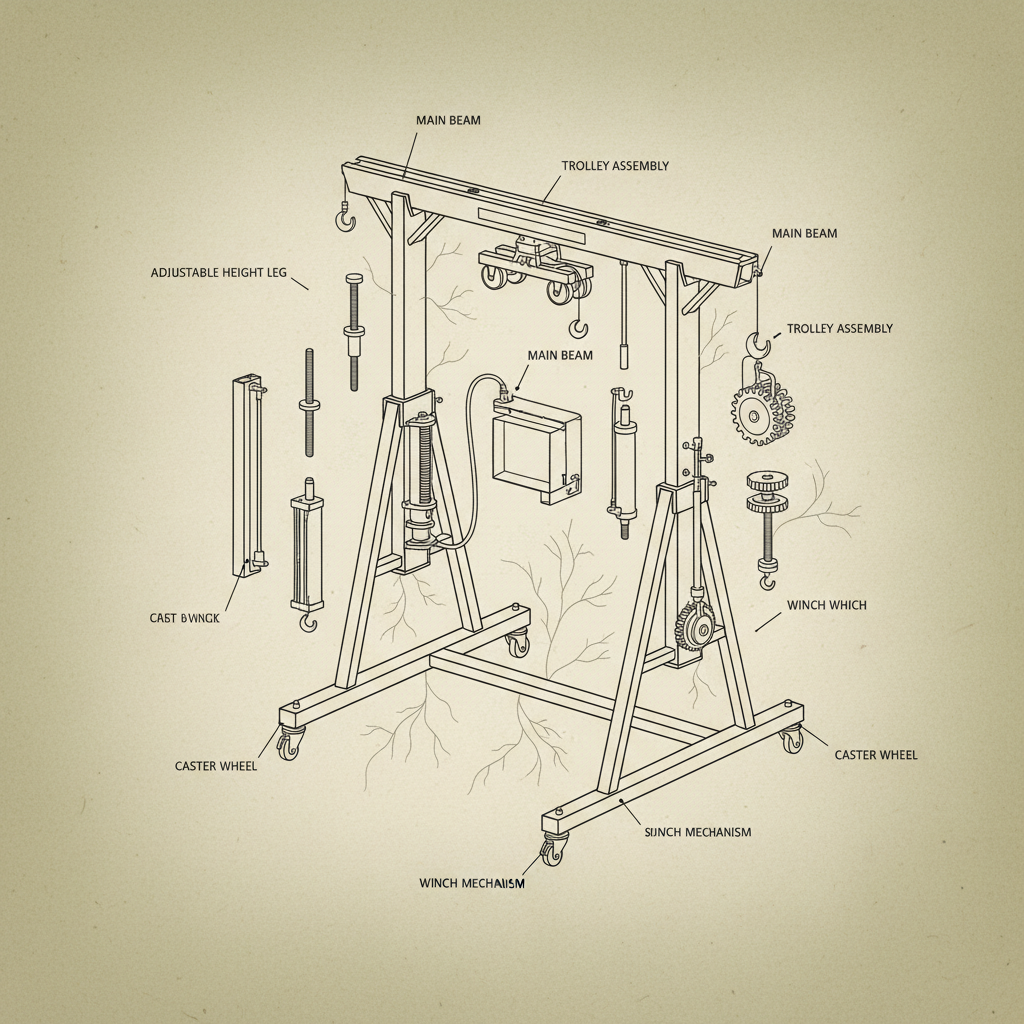
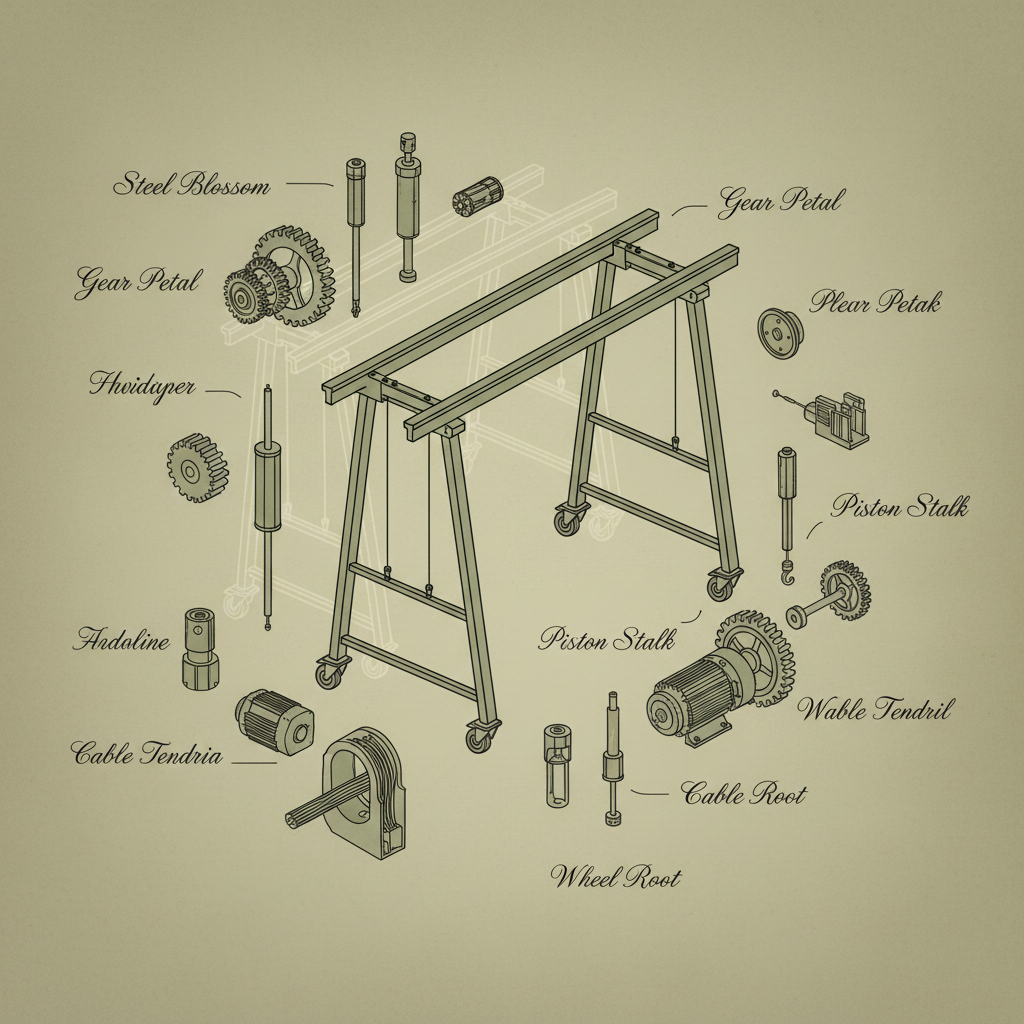
The method of support also influences the total project cost. Freestanding gantry systems, such as an Adjustable Gantry Crane, eliminate the need for building structural modifications, making them a cost-effective entry point. In contrast, ceiling-mounted systems require a professional assessment of the facility's roof trusses, often adding structural reinforcement costs to the base equipment price.
Lastly, the duty cycle (classified by standards like ISO or FEM) determines the longevity of the components. A crane designed for "light duty" (occasional use) uses different gearings and motors than one designed for "heavy duty" (continuous operation), directly impacting the manufacturer's quote and the equipment's expected lifespan.
In the lifting industry, there is often an inverse relationship between the lowest available price and the operational safety margin. Equipment that bypasses international standards typically achieves lower costs by reducing the thickness of load-bearing plates or using lower-grade alloys in critical fasteners.
True value in hoisting equipment is measured by the cost per lift over the equipment's lifespan, where safety certifications and wear-resistant components reduce the frequency of unplanned downtime and expensive emergency repairs.
Reliable manufacturers focus on precision engineering, such as implementing chrome-plated handles for corrosion resistance and ensuring all steel countertops are thickened for durability. This approach ensures that the equipment maintains its structural integrity even in demanding industrial environments, justifying a higher initial price point through lower maintenance overhead.
When analyzing the 1 ton overhead crane price, it is helpful to view the relative investment required for different configurations. The following index compares a basic manual hoist against more complex integrated systems, reflecting the typical increase in cost as automation and structural complexity grow.
This relative assessment highlights that while a basic manual gantry is the most accessible, the shift toward semi-automated or permanently installed bridge cranes represents a strategic leap in operational capacity, reflecting the higher engineering requirements and material costs.
In a typical industrial setting, such as a precision machine shop, a 1-ton system is often used to move heavy components between workstations. In these scenarios, the ability to integrate the crane with other material handling tools—like a Hydraulic Lift Table or a Machinery Mover—creates a seamless logistics flow that reduces the risk of manual handling injuries.
For manufacturers evaluating their layout, the decision between a fixed overhead crane and a mobile gantry depends on the frequency of movement. A mobile system provides the flexibility to relocate the lifting point as production lines change, whereas a fixed bridge crane maximizes floor space and provides consistent coverage over a wide area.
The industry is moving toward "intelligent lifting," where sensors and load-monitoring systems are integrated into 1-ton cranes to prevent overloading and track usage cycles for predictive maintenance. This transition shifts the focus from simple mechanical lifting to data-driven material handling, allowing managers to optimize workflow and enhance safety.
Environmental considerations are also influencing design. The use of energy-efficient motors in electric hoists and the implementation of sustainable coatings to prevent rust are becoming standard. These advancements ensure that equipment remains operational for longer periods, reducing the environmental impact of frequent replacements.
Furthermore, the convergence of various lifting tools into a unified ecosystem—combining overhead cranes with specialized devices like Permanent Magnetic Lifters—is enabling more precise and safer handling of ferrous materials, reducing the reliance on traditional slings and chains.
Selecting the right 1-ton system requires a balanced assessment of capacity, reach, and budget. The primary trade-off usually exists between the flexibility of a mobile system and the efficiency of a permanent installation. While a mobile gantry offers lower entry costs, it requires more manual effort to position and can obstruct floor traffic.
Technical specifications must be matched to the specific application. For instance, a system requiring a height range from 380mm to 1000mm, like certain hydraulic lift table models, serves a different ergonomic purpose than a high-reach overhead crane designed for ceiling-level storage.
The following table provides a comparative framework for evaluating different 1-ton lifting options based on typical industrial requirements.
| Option | Installation Cost | Mobility | Typical Application |
|---|---|---|---|
| Manual Gantry | Low | High | Intermittent Assembly |
| Electric Monorail | Medium | Fixed Path | Production Line Transfer |
| Bridge Crane | High | Full Area | General Workshop Use |
| Adjustable Gantry | Low-Medium | High | Variable Height Tasks |
| Jib Crane | Medium | Rotational | Single Station Loading |
| Hydraulic Lift | Low | Limited | Ergonomic Workstations |
Pricing is primarily determined by the span of the crane, the type of hoist (manual vs. electric), and the structural design (single vs. double girder). Additionally, the duty cycle rating—which defines how often the crane is used—and the quality of materials, such as high-tensile steel and wear-resistant casters, play significant roles in the final cost.
Yes, for many operations, a mobile gantry is more viable because it avoids expensive building modifications. It is ideal for facilities that require flexible lifting points or have limited budget for permanent installation. However, it is less efficient for high-frequency transfers across a large workshop compared to a fixed bridge crane.
The duty cycle refers to the percentage of time the crane is actually lifting loads. High-duty systems require more robust motors, reinforced gears, and better heat dissipation, which increases the initial price. Investing in a higher duty cycle than needed is an unnecessary expense, but underspecifying can lead to premature motor failure and frequent downtime.
Look for equipment that meets recognized international standards, such as EN1570 for lifting tables or ISO standards for cranes. Key indicators of quality include chrome-plated handles for longevity, the use of thickened steel countertops, and wear-resistant casters. These features ensure that the lower initial cost doesn't result in high long-term maintenance expenses.
Absolutely. A 1-ton crane is often the primary lifting tool, but its efficiency is maximized when used alongside a Manual Pallet Stacker, Pallet Truck, or Cargo Trolley. This integration allows for a complete material flow where the crane handles the vertical lift and the trolley or stacker manages the horizontal transport.
The most common mistake is focusing solely on the equipment price while ignoring installation and infrastructure costs. For ceiling-mounted systems, the cost of reinforcing the building structure can sometimes equal or exceed the cost of the crane itself. Always request a total project estimate that includes shipping, assembly, and safety certification.
Determining the right 1 ton overhead crane price requires a transition from "cost-buying" to "value-investing." By analyzing the specific requirements of the workspace—such as the necessary span, duty cycle, and the integration with other tools—businesses can avoid the pitfalls of under-specification and the waste of over-engineering.
As Hebei Dawei Hoisting Machinery Manufacturing Co., LTD. continues to evolve its lifting solutions since 1985, the emphasis remains on providing equipment that balances high performance with operational safety. Whether opting for a versatile Adjustable Gantry Crane or a fixed overhead system, the goal is to improve work efficiency while ensuring a secure environment for all operators.