Look, I’ve been running around construction sites for fifteen years. Fifteen years! You see a lot, you learn a lot, mostly you learn what not to do. These days, everyone’s talking about modularity, right? Prefabrication, plug-and-play… it’s the buzz. It's driven by labor shortages, tighter timelines, and the need for more controlled quality. But honestly, a lot of what I see is… over-engineered. People trying to solve problems that don’t exist.
What really gets me is when designers forget the site is a mess. Dust, mud, rain, guys dropping things… they draw these beautiful CAD models, but have they ever actually been on a site during a monsoon? I doubt it.
And portability? Don't even get me started. Everyone wants “portable”, but nobody defines what that means. Is it just being able to move it with a forklift? Or does it need to be light enough for two guys to carry? Huge difference, believe me.
The Current Landscape of Portable Adjustable Gantry Cranes
Honestly, the demand is through the roof. Everyone needs to lift stuff, and they need to do it quickly and without needing a full-blown, permanent crane setup. We're seeing a lot of interest from the precast concrete industry, wind turbine maintenance, and even smaller fabrication shops. They're using them for everything from lifting steel beams to installing machinery. The trend is definitely towards lighter, more adaptable systems. You’d be surprised how much weight these things can handle.
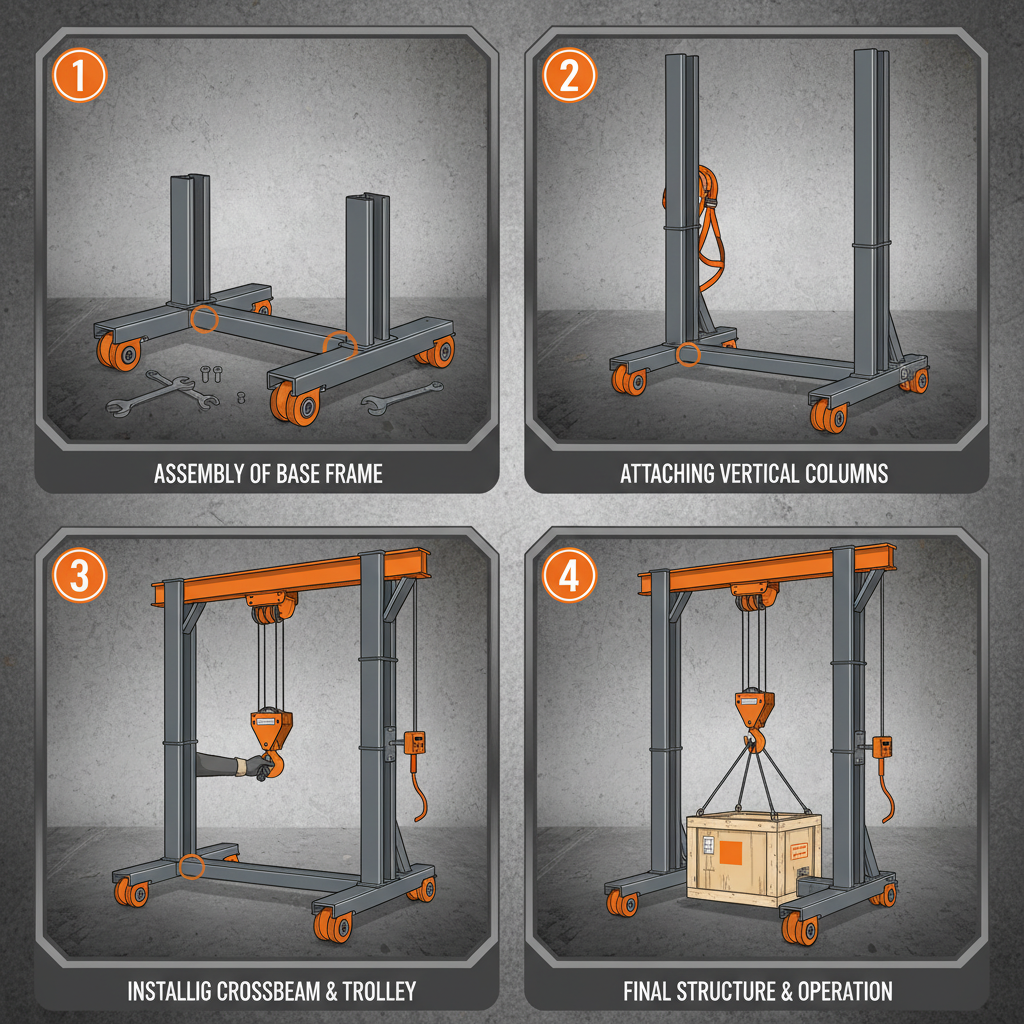
But it's not just about weight capacity. It's about setting it up in under an hour, without needing a team of certified riggers. That's the sweet spot.
Common Design Pitfalls & Overengineering
Have you noticed how many gantry cranes are… just unnecessarily complicated? I encountered this at a factory in Jiangsu province last time. They had this gantry that looked like something out of a sci-fi movie, all hydraulics and sensors. It was supposed to be “smart”. Turns out, it took three guys with laptops just to get it to lift a pallet of bricks. Seriously!
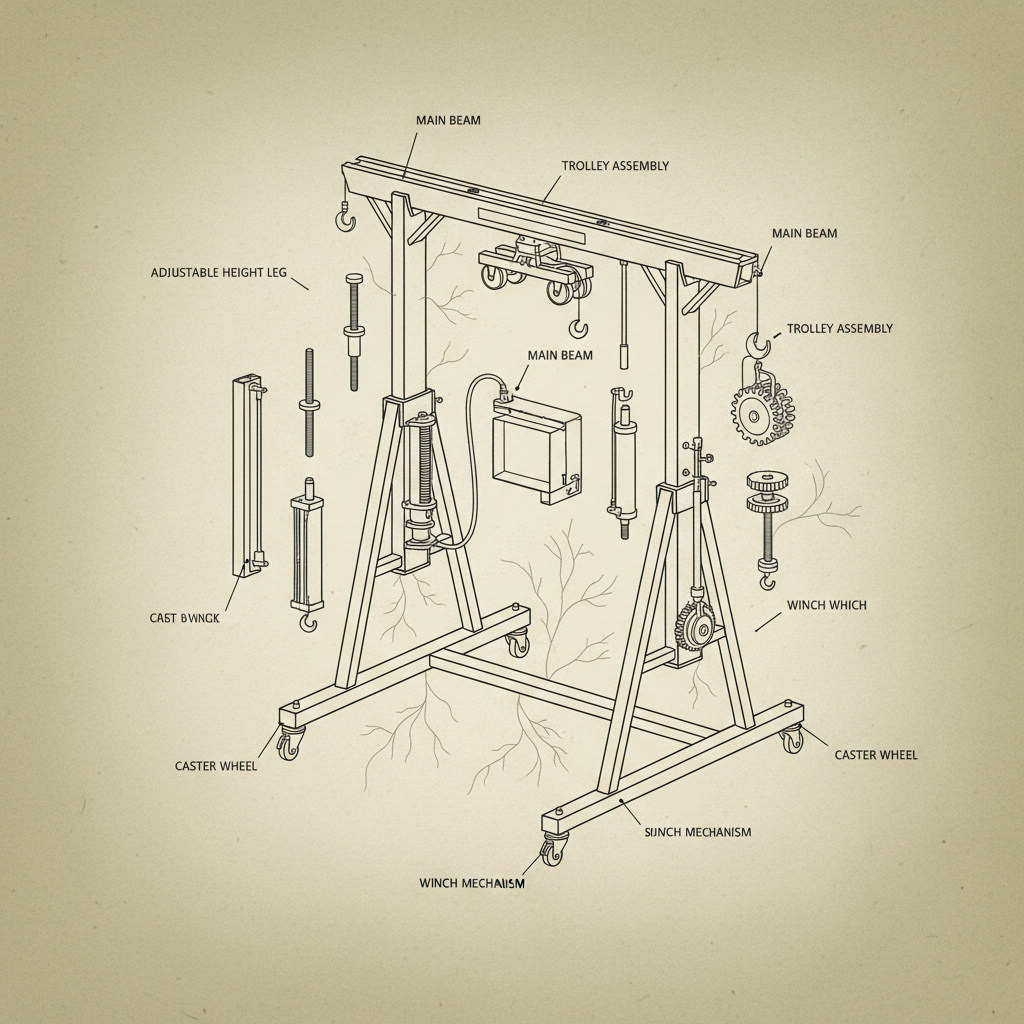
The biggest mistake? Trying to make them too versatile. They end up being good at nothing. A simple, robust design that does one thing well is always better than a fancy one that does ten things poorly. People forget about the basics: stable base, strong beams, reliable lifting mechanism.
And the weight! Some of these things are still too heavy to move easily. They talk about portability, but then they build them out of thick-walled steel tubing. It defeats the purpose.
Material Selection: From Steel to Composites
Steel is still king, let’s be real. It feels solid, it’s predictable, and everyone knows how to weld it. But it’s heavy, and it rusts. Strangely, I'm seeing more and more composite materials being used for the beams. Carbon fiber, fiberglass… they’re lighter, stronger, and they don't corrode.
The downside? The cost. Composites are expensive, and you need specialized training to work with them. Plus, they don’t always play nice with on-site modifications. Trying to drill a hole in carbon fiber without cracking it? Good luck.
We’re also using a lot of high-strength aluminum alloys for the uprights and bracing. It’s a good compromise between weight and strength. Smells a little metallic when you cut it, though. You get used to it.
Real-World Testing & On-Site Validation
Lab tests are fine, but they don’t tell the whole story. I mean, a pristine testing environment isn't exactly a construction site, right? We do a lot of on-site validation. Load testing with actual materials, in actual conditions. We put them through the wringer.
We also look at things like wind resistance, stability on uneven ground, and ease of assembly. And disassembly! That’s a big one. If it takes a whole crew a day to take it down, it’s not very portable. We also try to simulate wear and tear – drop tests, impact tests, repeated lifting cycles. It sounds brutal, but it's necessary.
Forget about the fancy simulations. Give me a real-world beatdown any day.
Portable Adjustable Gantry Crane Performance Metrics
How Users Actually Interact with Portable Gantries
You know, it's funny. We design these things to be used in a certain way, but users always find a way to do things differently. They’ll strap things to them that we never anticipated. They'll try to lift loads that are way beyond the capacity. They’re resourceful, I’ll give them that.
We've seen guys using them as makeshift scaffolding, or even as a platform for welding. Not recommended, obviously. But it happens. That's why clear labeling and safety instructions are so important. And a good training program. Because a gantry crane in the wrong hands can be dangerous.
Advantages, Disadvantages & Customization Options
The biggest advantage? Flexibility. They can be adapted to a wide range of applications. And they're a lot cheaper than installing a permanent crane system. The disadvantages? They're not as stable as a fixed crane, and they require more setup time.
Customization is key. We’ve had requests for everything from different lifting heights and spans to specialized attachments for handling specific materials. Last month, that small boss in Shenzhen who makes smart home devices insisted on changing the interface to for the control pendant. Said it was more “modern”. The result? It took him a week to find a compatible cable that could handle the power requirements. Anyway, I think a standard connector is always better.
A Customer Story: Shenzhen & the Interface
So, this guy, Mr. Lin, owns a small factory in Shenzhen that assembles smart home gadgets. He ordered a custom gantry crane for lifting components during the assembly process. He’s a bit of a tech enthusiast, always chasing the latest trends. He specifically requested a port for the control pendant, arguing that it was the future of connectivity.
We tried to explain that a standard industrial connector would be more reliable and readily available, but he wouldn't budge. He insisted on . Fast forward a week, and he’s calling us frantic. He can’t find a cable that can handle the power draw and the constant bending. Production is halted.
We ended up having to ship him a custom-made cable, at his expense, of course. It was a headache. The lesson? Sometimes, the simplest solution is the best. And listen to the guys who actually use this stuff.
Key Comparison of Portable Adjustable Gantry Crane Features
| Feature |
Low-Cost Model |
Mid-Range Model |
High-End Model |
| Max Load Capacity (tons) |
2 |
5 |
10 |
| Maximum Lifting Height (m) |
3 |
6 |
12 |
| Portability Score (1-10) |
6 |
8 |
9 |
| Assembly Time (minutes) |
60 |
45 |
30 |
| Material Composition |
Carbon Steel |
High-Strength Steel |
Aluminum Alloy & Composites |
| Price Range (USD) |
$2,000 - $5,000 |
$5,000 - $15,000 |
$15,000+ |
FAQS
That really depends on the design and the base weighting. Generally, we design for a wind load of around 60 mph, but it's crucial to check the specific specifications for the model you're considering. We always recommend securing the gantry with anchors or ballast weights in windy conditions. Ignoring that could be a real disaster.
Ideally, a visual inspection should be conducted before each use, checking for any signs of damage or wear. A more thorough inspection, including checking the lifting mechanisms and structural components, should be done annually by a qualified professional. Don’t skip this! It’s about safety, plain and simple.
It’s not recommended, but it's often unavoidable on a construction site, right? We design for a certain degree of leveling tolerance, but significant unevenness can compromise stability. Always use leveling shims and ensure the base is adequately supported. And be careful! It's better to be safe than sorry.
Lead times vary depending on the complexity of the customization. Simple modifications, like a different lifting height, might take 4-6 weeks. More extensive changes, like a custom beam design, could take 8-12 weeks or longer. Planning ahead is crucial, especially if you have a tight schedule. We always try to be upfront about timelines.
While not always legally mandated, we strongly recommend comprehensive training for all operators. This should cover safe lifting practices, gantry setup and disassembly, load calculation, and emergency procedures. We offer training programs ourselves, or can recommend certified training providers. A well-trained operator is a safe operator.
With regular maintenance, a well-built portable gantry can easily last 10-15 years, or even longer. Key maintenance includes lubricating moving parts, inspecting for corrosion, and replacing worn components. Neglecting maintenance will significantly shorten its lifespan. Think of it like a truck – you gotta take care of it!
Conclusion
So, yeah, portable adjustable gantry cranes. They're not a silver bullet, but they’re a hugely valuable tool for a lot of industries. They’ve come a long way in the last few years, with better materials, smarter designs, and a greater focus on safety. The key is to choose the right gantry for the job, and to use it properly. Don't get caught up in the marketing hype – focus on the fundamentals.
Ultimately, whether this thing works or not, the worker will know the moment he tightens the screw. If it feels solid, if it lifts smoothly, and if it makes his job easier, then it’s a good gantry. If it wobbles, creaks, or feels like it's going to fall apart, it’s not. It’s as simple as that. If you need a reliable gantry, give us a shout at portable adjustable gantry crane. We've seen it all.