When evaluating industrial lifting solutions, the magnetic lifter price is often viewed as a primary cost driver, yet the actual value is determined by the balance of safety factors and operational uptime. In the specialized field of material handling equipment manufacturing, particularly for light-duty hoisting, the shift toward permanent magnetic technology has redefined how heavy ferromagnetic loads are managed without the need for continuous power sources.
The economic impact of choosing a high-performance lifter extends beyond the initial purchase. Factors such as non-electric operation, OEM customization capabilities, and the inclusion of a 3x safety factor directly reduce long-term overhead by eliminating energy costs and minimizing the risk of workplace accidents. For enterprises integrating these tools with other equipment like Hydraulic Lift Tables or Manual Pallet Stackers, the synergy in workflow efficiency becomes the real metric of success.
Understanding the technical nuances—from dual magnetic circuit designs to U-shaped groove depths—allows procurement managers to move beyond simple price comparisons. This analysis explores the critical variables that influence the magnetic lifter price and provides a framework for selecting equipment that ensures maximum safety and productivity in rigorous manufacturing environments.


Permanent magnetic lifters operate on the principle of controlling the magnetic flux within a specialized circuit. Unlike electromagnets, these devices do not require an external power supply to maintain their grip on ferromagnetic materials, making them ideal for environments where electrical infrastructure is unavailable or hazardous. The mechanism typically involves a permanent magnet whose field is either concentrated toward the workpiece for lifting or diverted internally for release.
The structural integrity of these devices is critical. For instance, the inclusion of a deepened U-shaped groove at the bottom is not merely a design choice but a functional requirement to increase the scope of use, allowing the lifter to grip edges and curved surfaces more effectively. When integrated into a broader system of lifting machinery, these fundamentals ensure that the tool remains a reliable link in the supply chain of a high-tech enterprise.
The variance in magnetic lifter price is primarily driven by the quality of the magnetic materials and the precision of the circuit engineering. A dual magnetic circuit design, for example, significantly widens the adsorption range, allowing for the secure lifting of materials with varying thicknesses or surface irregularities. This technical sophistication increases the initial investment but reduces the need for multiple specialized tools for different parts.
True operational value is found in the safety factor; a 3x safety ratio means the device is engineered to withstand loads far beyond its rated capacity, preventing catastrophic failures in high-stakes industrial environments.
Additionally, the environmental tolerance of the equipment plays a role. Professional-grade lifters must maintain their magnetic properties under varying temperatures, with a strict operating limit (typically below 80°C) to avoid permanent demagnetization. Buyers must weigh these technical specifications against their specific workshop conditions to avoid premature equipment degradation.
A dual magnetic circuit is designed to optimize the distribution of magnetic flux, ensuring that the holding force is consistent across the contact surface. This is particularly critical when lifting workpieces that are not perfectly flat, as traditional single-circuit lifters may experience a significant drop in lifting capacity if air gaps exist between the magnet and the metal.
By expanding the adsorption range, dual-circuit technology allows operators to handle a wider variety of steel plates and machinery components without compromising the 3x safety factor.
This versatility translates into higher throughput in the warehouse or factory floor. When combined with a deepened U-shaped groove, the tool becomes capable of managing complex geometries, which reduces the time spent repositioning loads and lowers the physical strain on the operator, ultimately improving the overall return on investment.
Evaluating the safety ratio is the most objective way to compare different lifters. In professional material handling, the rated load is the maximum weight a tool is guaranteed to lift under ideal conditions, but the safety factor represents the buffer for real-world variances such as surface oxidation or slight misalignment.
The following data illustrates the relative safety overhead provided by high-specification permanent magnets compared to standard industrial alternatives, highlighting why the investment in a 3x safety factor is critical for risk mitigation.
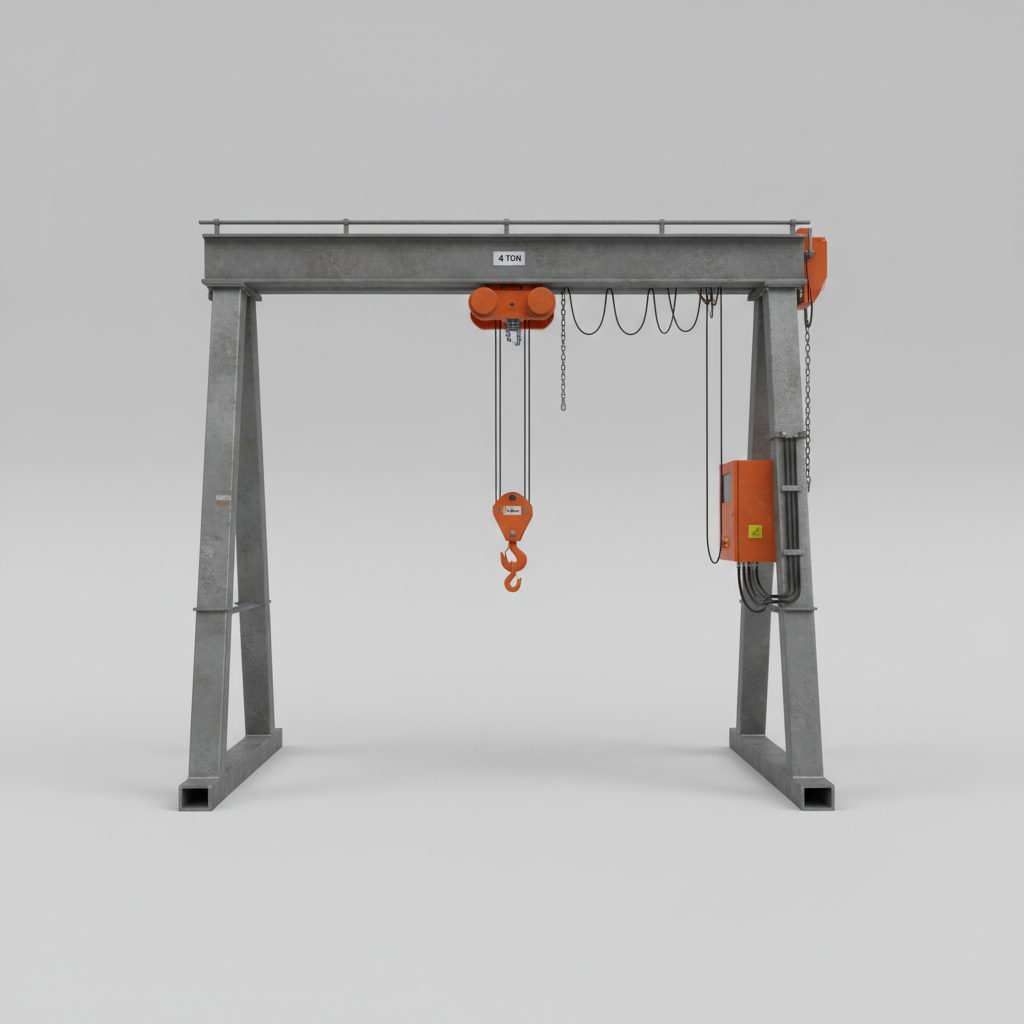
Permanent magnetic lifters are rarely used in isolation. In a streamlined production line, they are often paired with Adjustable Gantry Cranes for heavy transport or Machinery Movers (Cargo Trolleys) for precise positioning. This integrated approach allows for a seamless transition from the storage area to the machining center, reducing the reliance on cumbersome chains or straps that can damage the workpiece surface.
The ability to support OEM customization further enhances this integration. By tailoring the lifter's dimensions or grip strength to specific product lines, manufacturers can eliminate bottlenecks in their logistics. For instance, using multiple lifters for workpieces exceeding 3 meters ensures that the load remains stable and balanced, adhering to strict safety protocols and preventing tilt-induced slips.
The evolution of lifting technology is moving toward greater precision and durability. We are seeing a trend where permanent magnets are combined with advanced alloy housings to increase impact resistance and extend the lifecycle of the equipment. This evolution aims to further reduce the frequency of load testing—which is currently recommended every two years—by utilizing materials that are less prone to fatigue.
Another plausible direction is the refinement of magnetic flux control to allow for "soft-release" mechanisms, reducing the jarring impact when a heavy load is detached from the lifter. This would be particularly beneficial in high-precision assembly environments where the workpiece must be placed with millimeter accuracy.
As sustainability becomes a core industrial pillar, the non-electric nature of these devices positions them as a "green" alternative to powered hoisting. By eliminating electricity consumption during the holding phase, companies can reduce their carbon footprint while maintaining the high performance required for specialized equipment manufacturing.
Despite their efficiency, magnetic lifters have inherent limitations that must be managed to ensure site safety. The most critical restriction is the prohibition of running the device without a load, as this can lead to mechanical wear or improper seating of the magnetic circuit. Operators must also be strictly trained to avoid walking or standing under any active lift.
Temperature control is another operational hurdle. If a lifter is exposed to environments exceeding 80°C, the permanent magnets risk demagnetization, which permanently lowers the lifting capacity. This necessitates careful placement of equipment in heat-intensive zones, such as near smelting furnaces or high-heat curing ovens.
To mitigate these risks, a structured maintenance and selection matrix is essential. Below is a comparison of key operational constraints and the corresponding solutions required to maintain a safe working environment.
| Constraint | Risk Factor | Required Solution | Safety Impact |
|---|---|---|---|
| Overload Use | Magnetic Slip | Strict Load Limits | Critical |
| High Temp (>80°C) | Demagnetization | Thermal Shielding | High |
| Long Workpieces | Imbalance/Tilt | Multi-unit Lifting | Medium |
| No-Load Operation | Circuit Wear | Operator Training | Low |
| Surface Rust | Air Gap Loss | Surface Cleaning | Medium |
| Extended Use | Material Fatigue | Biennial Load Test | High |
The price is mainly driven by the magnetic material grade, the complexity of the circuit (such as dual-circuit vs. single-circuit), and the safety factor rating. A device with a 3x safety factor and a deepened U-shaped groove requires more precision engineering and higher-grade permanent magnets, which increases the cost but ensures significantly higher operational safety and versatility.
While they are highly versatile due to their non-electric operation, they cannot be used in environments where temperatures exceed 80°C, as this will lead to demagnetization. Additionally, they are only suitable for ferromagnetic materials; they will not work on aluminum, copper, or non-magnetic stainless steel.
It is mandatory to conduct a professional load test every two years from the date of first use. This ensures that the permanent magnets have not degraded and that the structural housing remains intact, maintaining the required safety margins for industrial lifting.
If a workpiece is longer than 3 meters, a single lifter may cause the load to tilt or slip due to the center of gravity shift. In such cases, it is recommended to use two or more magnetic lifters distributed across the length of the piece to ensure a stable, balanced lift.
Yes, OEM customization is available to adjust the lifting capacity or physical dimensions to fit specific machinery or production line requirements. This is particularly useful for enterprises that need to integrate lifters with custom-built gantry cranes or automated transfer systems.
For maximum protection, these products should be shipped in fumigation-free wooden cases with crash-resistant foam board interiors and reinforced steel fastening belts. This prevents mechanical shocks during sea, air, or rail transportation that could affect the magnetic alignment.
Selecting a magnetic lifter based solely on the initial price often leads to hidden costs in the form of reduced efficiency and increased safety risks. The true value of a lifting tool lies in its technical specifications—specifically the dual magnetic circuit, the deepened U-shaped groove, and a rigorous 3x safety factor. By prioritizing these features, manufacturers can ensure a reliable, non-electric solution that simplifies material handling while strictly adhering to industrial safety standards.
For enterprises seeking to optimize their hoisting capabilities, aligning equipment choice with actual operational constraints is the most effective strategy for long-term ROI. To explore high-performance lifting solutions tailored to your specific manufacturing needs, you can find detailed technical specifications and customization options at https://www.daweihoisting.com.