Selecting the right lifting infrastructure often comes down to a critical balance between load capacity, structural mobility, and spatial constraints. In industrial environments where material throughput determines profitability, the choice of a lifting system is not merely a purchase but a strategic operational decision.
Modern warehouses and workshops are increasingly moving away from fixed overhead systems in favor of flexible, modular solutions. This shift is driven by the need for rapid reconfiguration and the ability to handle diverse load types without expensive permanent installations.
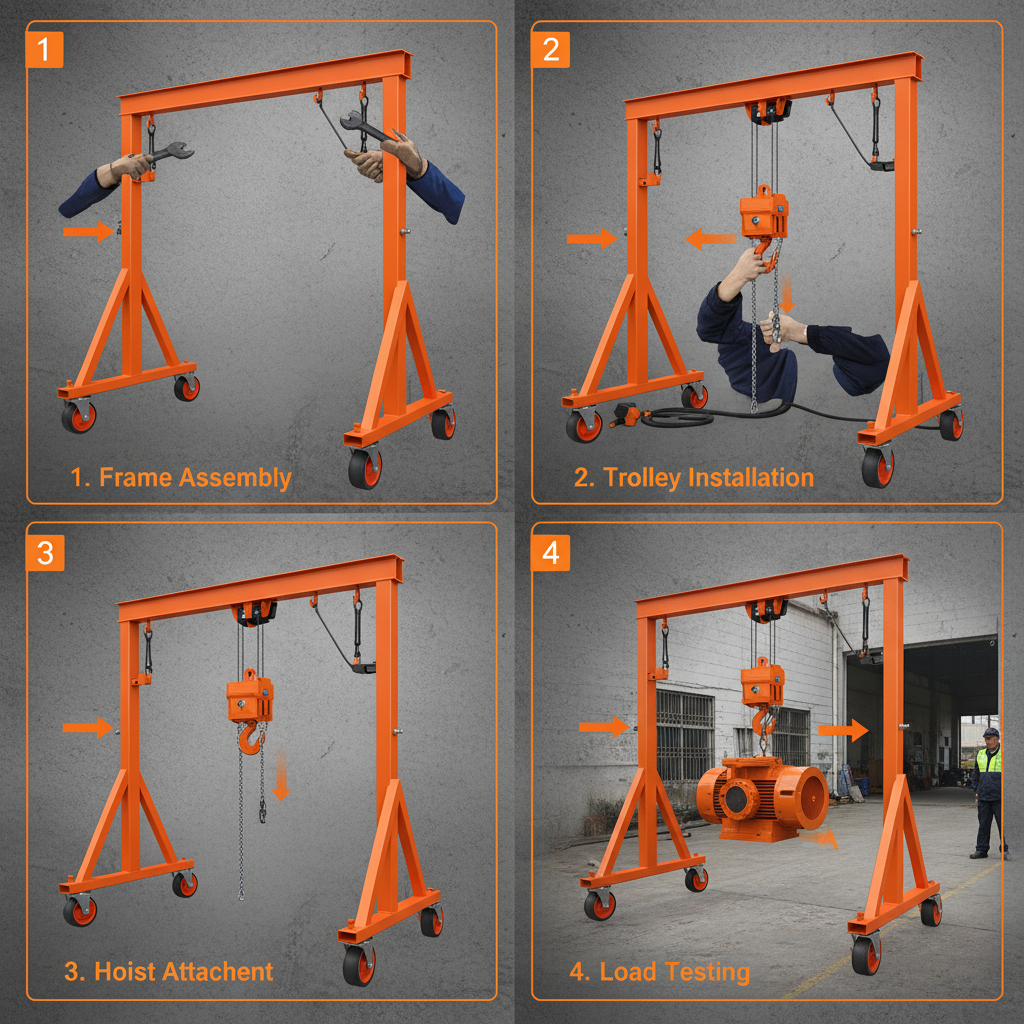
Whether you are optimizing a small-scale storage unit or upgrading a heavy manufacturing line, partnering with a competent gantry crane company ensures that safety standards are met while maximizing vertical space utilization.


Historically, lifting in manufacturing relied on heavy, fixed-rail cranes that anchored the workflow to a specific location. However, the rise of lean manufacturing and just-in-time logistics has necessitated a move toward adjustable and portable systems.
The modern adjustable gantry crane represents this evolution, allowing operators to modify the height and span based on the specific load or the architectural constraints of the workshop. This adaptability reduces the need for multiple specialized machines.
The reliability of any lifting device is rooted in its material science and hydraulic precision. High-test chains and thickened steel plates are not optional upgrades but fundamental requirements to prevent structural fatigue under repeated cyclic loading.
In the case of manual pallet stackers, the integration of a durable steel frame with a reliable hydraulic system is what ensures smooth vertical transition. When the hydraulic plunger diameter and oil pump quality are optimized, the operator experiences less resistance, which directly correlates to reduced workplace fatigue and higher safety.
Wear-resistant casters further contribute to the operational lifecycle by minimizing friction and preventing floor damage in high-traffic warehouse zones. These components collectively determine whether a machine can handle its rated capacity consistently over years of service.
Load integrity is evaluated not just by the maximum weight a machine can lift, but by its stability at maximum extension. A critical error in procurement is overlooking the "center of gravity" shift that occurs when a load is raised to its peak height.
Structural safety in lifting machinery is defined by the synergy between the frame's rigidity and the precision of the lifting mechanism; a failure in either leads to catastrophic instability.
For companies like Hebei Dawei Hoisting Machinery Manufacturing Co., LTD., the focus remains on providing equipment that balances these factors. By utilizing specialized research and development, they ensure that equipment like the manual pallet stacker maintains a stable door frame width and consistent lifting height across different load weights.
Different material handling tasks require different mechanical advantages. While a gantry crane offers high-capacity overhead movement, a pallet truck series is optimized for horizontal transport, and a spring balancer is designed for ergonomic tool support.
Understanding the relative efficiency of these tools allows a facility manager to map out the most logical flow of materials, reducing "dead time" where workers are waiting for equipment to become available or moving loads inefficiently.
In a typical industrial setting, such as a machinery assembly shop, a gantry crane serves as the primary means of moving heavy engine blocks or chassis components. Its ability to be positioned exactly where needed avoids the bottlenecks associated with a single fixed hoist.
Complementing this, a manual pallet stacker is used for the "last mile" of delivery, transporting smaller components from the receiving dock to the assembly station. By integrating both, a manufacturer can maintain a continuous flow of materials without compromising safety or relying on overly complex automated systems.
The industry is currently witnessing a convergence of ergonomics and mechanical efficiency. There is a significant trend toward "hybrid" manual systems—equipment that remains manually operated for control but incorporates hydraulic assists to reduce the physical strain on the operator.
Furthermore, the demand for specialized lifting tools, such as permanent magnetic lifters and spring balancers, is increasing. These tools address the need for precision handling of ferrous materials and the reduction of repetitive strain injuries in assembly lines.
As global supply chains move toward more decentralized, smaller-scale workshops, the reliance on versatile equipment from a reliable gantry crane company becomes critical for maintaining competitiveness through operational agility.
Choosing the correct equipment requires a rigorous evaluation of the operational environment. A machine that performs well on a polished epoxy floor may fail on a rough concrete surface; similarly, a crane designed for indoor use may suffer rapid corrosion in a port environment.
Key technical considerations include the effective fork length and the maximum frame height. For example, if a pallet stacker is intended for use in a warehouse with low-clearance mezzanines, the frame maximum height must be strictly verified against the ceiling height to avoid collisions.
The following framework provides a relative comparison of lifting solutions based on typical industrial requirements to assist in the decision-making process.
| Equipment Type | Primary Use Case | Mobility Level | Load Stability |
|---|---|---|---|
| Adjustable Gantry | Heavy Component Lifting | Moderate | High |
| Manual Stacker | Pallet Stacking/Storage | High | Moderate |
| Cargo Trolley | Short-distance Shift | Very High | Low |
| Magnetic Lifter | Steel Plate Handling | Tool-based | Very High |
| Pallet Truck | Horizontal Transport | High | Moderate |
| Spring Balancer | Tool Weight Offset | Stationary | High |
A gantry crane is an overhead lifting system that moves loads along a horizontal beam, typically used for heavier items that need to be suspended. A pallet stacker is a floor-based piece of equipment designed specifically to lift, stack, and transport pallets. While the crane focuses on vertical and overhead movement, the stacker is optimized for warehouse storage and short-distance transport.
Determine your highest storage shelf or the maximum height required for your specific application. Always ensure a safety margin of at least 10-15cm above the target height. For example, if your top shelf is at 1500mm, a stacker with a fork lifting height of 1600mm is appropriate to allow for pallet clearance during the placement process.
The most critical factors are the quality of the hydraulic seals, the purity of the hydraulic oil, and the consistency of the load. Overloading the equipment beyond its rated capacity (e.g., exceeding 1T or 2T) causes premature wear on the plunger and seals. Regular maintenance of the oil pump and ensuring the use of wear-resistant casters also prevents structural stress.
Safety depends on the application. Adjustable gantry cranes offer the advantage of being placed precisely where the load is, reducing the risk of "swinging" loads across a workshop. However, they require strict adherence to height and span limits. When sourced from a professional gantry crane company, these systems include safety locks and reinforced frames to match fixed hoist stability.
Key maintenance involves checking the hydraulic oil levels every few months, lubricating the chain and moving joints, and inspecting the casters for debris or wear. Because these machines rely on a manual hydraulic pump, ensuring there are no air bubbles in the system is essential for maintaining smooth lifting performance and preventing "jerky" movements.
For ferrous materials, magnetic lifters are often superior because they provide a secure grip without the need for mechanical squeezing, which can damage the edges of the material. However, they cannot be used on non-magnetic materials like aluminum or stainless steel. The choice depends on the material properties and the required precision of the lift.
Optimizing industrial material handling is a continuous process of aligning equipment capability with operational needs. By prioritizing structural integrity and choosing modular solutions like those provided by an experienced gantry crane company, businesses can significantly improve both safety and efficiency.
From the precise hydraulic lift of a pallet stacker to the flexible span of an adjustable gantry, the right combination of tools transforms a warehouse from a simple storage space into a high-performance logistical hub.