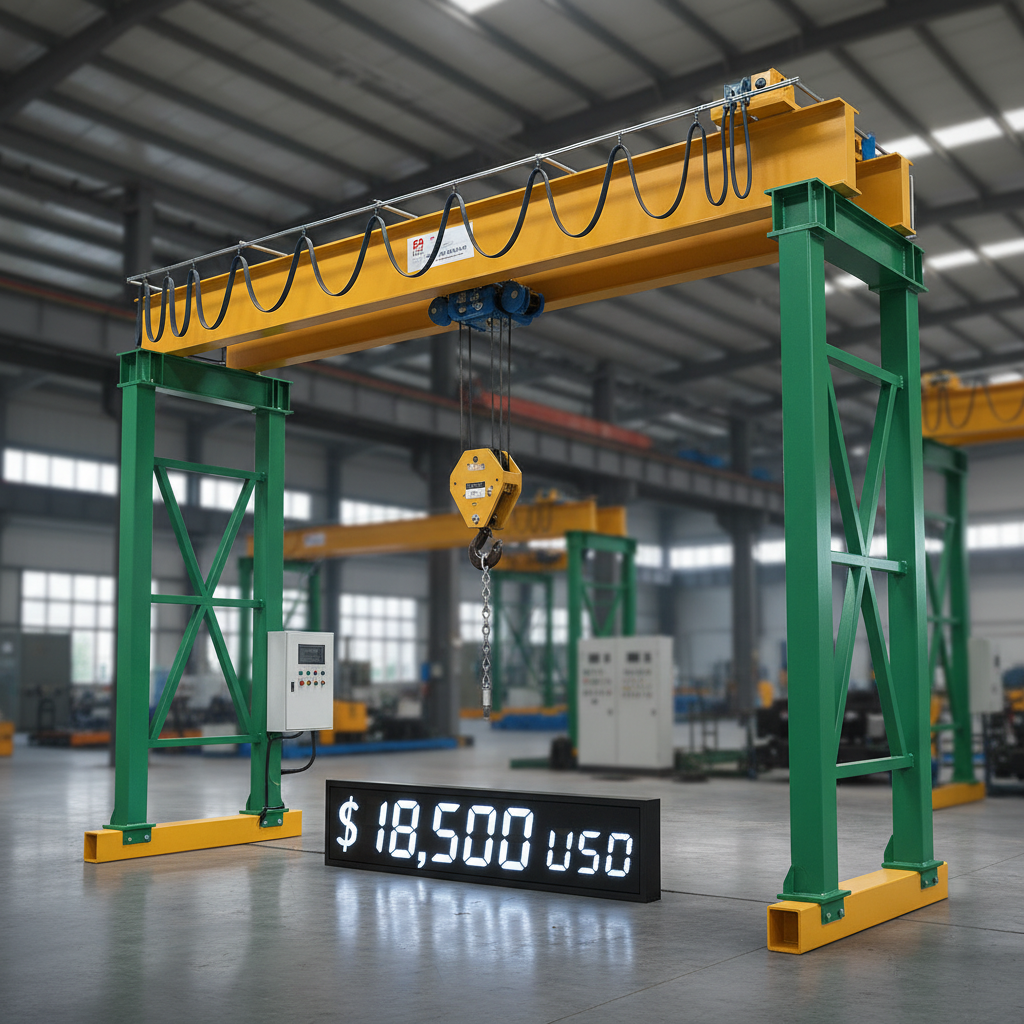
When optimizing warehouse efficiency or upgrading a workshop, understanding the 1 ton overhead crane price is the first critical step for most facility managers. This specific capacity represents a "sweet spot" in material handling, offering enough power for significant industrial loads while remaining compact enough for small-scale operations, making it a globally sought-after investment for lean manufacturing.
The variability in the 1 ton overhead crane price is not merely a matter of brand preference but is deeply tied to technical specifications, safety certifications, and the specific duty cycle required for the environment. Whether you are dealing with precision automotive components or heavy machinery parts, the cost reflects the engineering required to ensure stability, longevity, and operator safety.
Navigating the market for these lifting solutions requires a balance between upfront expenditure and long-term operational value. By analyzing the factors that influence the 1 ton overhead crane price, businesses can avoid overpriced redundancies and under-engineered equipment, ensuring a seamless integration into their existing production lines.
Understanding Global Market Drivers for 1 Ton Overhead Crane Price
The global demand for light-duty lifting equipment has surged as SME manufacturing hubs expand across Southeast Asia and Eastern Europe. This demand directly impacts the 1 ton overhead crane price, as economies of scale in production often lower the base cost, while specialized customization for local safety regulations can drive the price upward.
Furthermore, fluctuations in raw steel prices and global logistics costs play a significant role. Since a 1-ton crane relies on high-grade structural steel to maintain a high safety factor, any volatility in the commodities market is quickly reflected in the final quote provided to the end-user.
Technical Specifications Influencing Lifting Costs
When dissecting the 1 ton overhead crane price, one must look at the hoist mechanism. Electric chain hoists are generally more affordable and common for 1-ton capacities, whereas wire rope hoists might be preferred for higher lift heights or more intensive duty cycles, slightly increasing the initial investment.
The span and hoist height are equally critical. A wider span requires heavier bridge girders to prevent deflection under load, which adds to the material cost. Similarly, increasing the lift height necessitates longer chain or rope lengths and potentially more robust support structures, which incrementally pushes the 1 ton overhead crane price higher.
Finally, the control system—ranging from simple pendant controls to sophisticated wireless radio remotes—adds another layer of cost. While a pendant is the budget-friendly choice, wireless systems improve operator safety and efficiency, adding a premium to the total procurement cost.
Cost Efficiency and Long-term ROI Analysis
Evaluating a 1 ton overhead crane price should not be viewed as a simple expense, but as an investment in operational throughput. By reducing manual lifting and the reliance on forklifts in tight spaces, companies see a drastic reduction in labor hours per task.
The real value lies in the prevention of workplace injuries. A well-priced 1 ton overhead crane eliminates the risks associated with manual handling, potentially saving thousands in insurance premiums and lost-time accidents, which far outweighs the initial purchase price.
Maintenance costs also figure into the total cost of ownership. Investing in a slightly higher 1 ton overhead crane price for a model with self-lubricating bearings or high-grade alloy components can reduce the frequency of downtime, ensuring the equipment pays for itself within the first 18-24 months of operation.
Comparative Pricing Models Across Industry Standards
Different industrial sectors prioritize different features, which leads to varied pricing tiers. For instance, a clean-room pharmaceutical environment requires stainless steel components and specialized coatings to prevent contamination, resulting in a higher 1 ton overhead crane price compared to a standard automotive garage.
Conversely, basic workshop installations focusing on intermittent use can opt for standardized, off-the-shelf configurations. These "standardized" models offer the most competitive 1 ton overhead crane price because they leverage mass production and simplified installation processes.
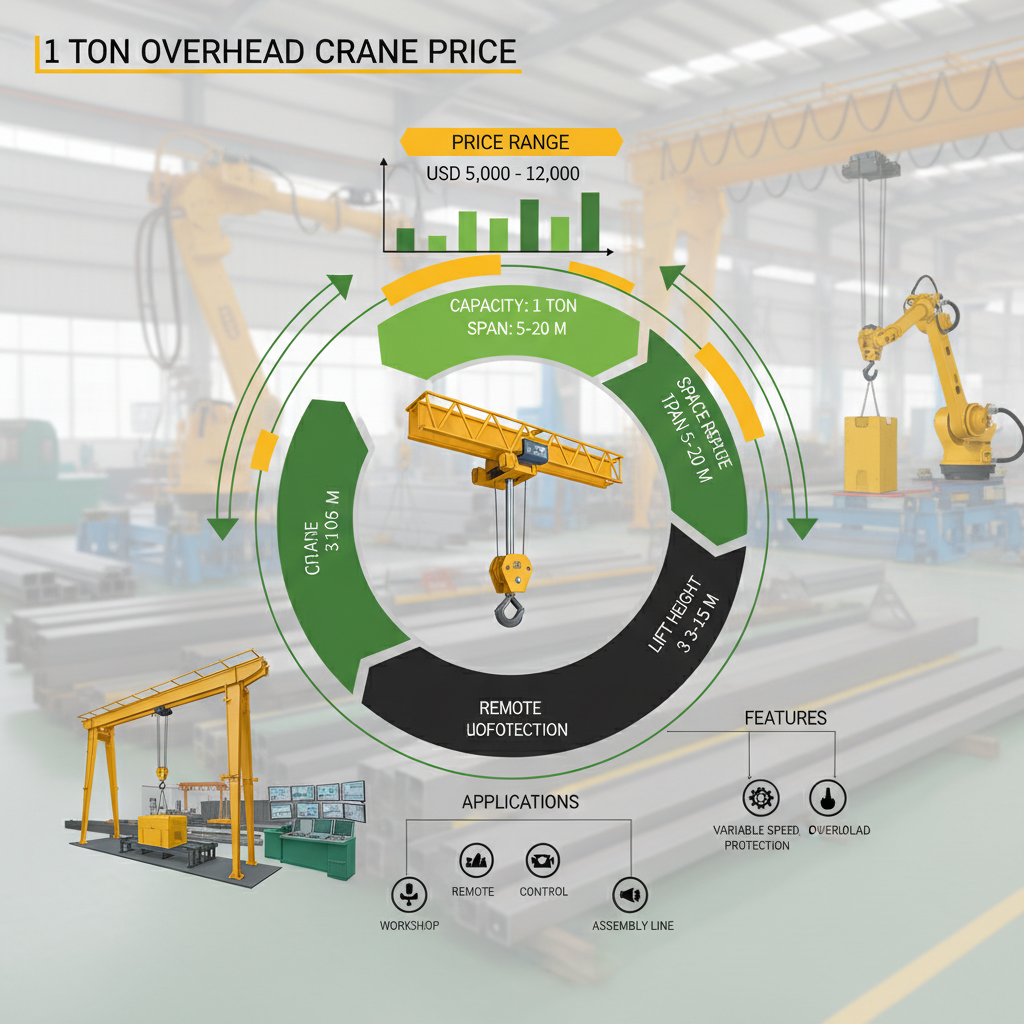
Investment Value vs. Cost for 1 Ton Overhead Crane Configurations
Global Applications and Implementation Case Studies
In precision engineering shops across Germany and Japan, the 1 ton overhead crane price is often viewed as a baseline for quality. These industries utilize these cranes for moving delicate molds and dies, where the focus is on micro-adjustments and smooth acceleration rather than just raw lifting power.
In emerging industrial zones in India and Brazil, the focus shifts toward durability and ease of repair. Here, the 1 ton overhead crane price is balanced against the availability of spare parts and the ability of local technicians to perform routine maintenance without expensive proprietary tools.
Safety Certifications and Their Impact on Valuation
Certification standards such as CE, ASME, or ISO significantly influence the 1 ton overhead crane price. Equipment that undergoes rigorous third-party testing to meet these international standards carries a premium, but this cost is an insurance policy against catastrophic failure and legal liabilities.
A "budget" crane without these certifications might seem attractive initially, but the hidden costs—such as increased inspection frequency and higher insurance premiums—often make it more expensive in the long run. True value in the 1 ton overhead crane price includes the peace of mind that the equipment will not fail under peak load.
Moreover, specialized safety features like overload protection devices and emergency stop integration are now standard in high-end models. While these add to the initial 1 ton overhead crane price, they are non-negotiable for companies adhering to strict OSHA or EU safety mandates.
Future Trends in Smart Lifting Technology Costs
The integration of IoT (Internet of Things) is beginning to redefine the 1 ton overhead crane price. Predictive maintenance sensors can now alert managers before a component fails, shifting the cost model from reactive repair to proactive optimization.
We are also seeing a trend toward "Green Lifting," where high-efficiency motors reduce energy consumption. Although the initial 1 ton overhead crane price may be 10-15% higher for these eco-friendly models, the reduction in monthly utility bills and the alignment with corporate sustainability goals provide a strong financial incentive.
As automation increases, we expect to see more semi-automated 1-ton systems that can follow pre-programmed paths. This evolution will likely create a new pricing tier for the 1 ton overhead crane price, moving from simple hardware sales to "Lifting-as-a-Service" (LaaS) models.
Analysis of Configuration Factors Affecting 1 Ton Overhead Crane Pricing
| Configuration Tier |
Key Component Influence |
Price Impact Level |
Recommended Use Case |
| Basic Economy |
Manual Hoist / Standard Steel |
Low (1-3) |
Low-frequency hobbyist shops |
| Industrial Standard |
Electric Chain Hoist / Pendant |
Moderate (4-6) |
General manufacturing cells |
| Premium Performance |
VFD Drive / Wireless Remote |
High (7-8) |
High-precision assembly lines |
| Extreme Environment |
Stainless Steel / Explosion Proof |
Very High (9-10) |
Chemical or Food processing |
| Smart Integrated |
IoT Sensors / Automated Tracking |
Very High (8-10) |
Industry 4.0 Smart Factories |
| Custom Engineering |
Special Span / Custom Lift Heights |
Variable (5-10) |
Unique architectural constraints |
FAQS
The most significant variables are the hoist type (manual vs. electric), the span of the bridge, the lift height, and the duty cycle classification. Additionally, customization for hazardous environments (like explosion-proof requirements) or high-precision needs can significantly increase the price compared to a standard warehouse model.
Not necessarily, but it requires scrutiny. A lower price might simply mean fewer "bells and whistles" or a simpler design suitable for light use. However, if the price is significantly below market average, it may indicate lower-grade steel, lack of safety certifications, or poor-quality motor components, which increases long-term risk.
The quoted equipment price usually excludes installation. Depending on your facility's existing infrastructure, installation can add 10% to 30% to the total project cost. This includes runway beam installation, electrical wiring, and the mandatory safety certification inspection after the crane is commissioned.
Yes. Opting for a pendant control instead of a wireless remote, choosing a standard lift height rather than a custom one, and selecting a standard chain hoist can lower the cost. However, we recommend prioritizing safety-critical components over cosmetic or convenience features.
Generally, you should budget 2-5% of the initial 1 ton overhead crane price annually for preventive maintenance. This includes lubrication, cable inspections, and load testing. Regular maintenance extends the machine's life and prevents costly emergency repairs.
Many suppliers offer leasing or installment plans to help businesses manage the initial 1 ton overhead crane price. This allows companies to preserve cash flow while immediately gaining the productivity and safety benefits of the equipment.
Conclusion
Determining the right 1 ton overhead crane price involves a comprehensive analysis of technical requirements, safety standards, and long-term operational goals. From the basic structural components to the integration of smart IoT sensors, every feature added to the crane should serve a specific purpose in increasing efficiency or enhancing operator safety.
As we move toward an era of smarter, greener manufacturing, the value of a 1-ton lifting solution will be measured not just by its purchase price, but by its ability to integrate into an automated ecosystem. We suggest that facility managers prioritize certified quality and energy efficiency to ensure their investment remains viable for decades to come. For professional guidance and a tailored quote, visit our website: www.daweihoisting.com