The world relies on efficient material handling solutions across a vast spectrum of industries, from manufacturing and construction to logistics and warehousing. Within this landscape, the small gantry crane emerges as a critical, versatile tool. Its compact design and adaptable functionality address specific lifting and movement needs that larger, more complex systems simply can’t meet cost-effectively or conveniently. Understanding the nuances of small gantry cranes is therefore vital for professionals seeking optimized operational efficiency and safety.
Globally, the demand for efficient and adaptable lifting solutions is continuously growing, driven by expanding infrastructure projects, increasing manufacturing output, and a heightened focus on workplace safety. According to the UN, global construction spending is projected to reach $8 trillion by 2030, necessitating robust and reliable lifting equipment. Small gantry cranes, offering both portability and strength, are uniquely positioned to meet these evolving demands, particularly in confined spaces and areas with limited overhead clearance.
The increasing reliance on just-in-time manufacturing and streamlined supply chains further reinforces the importance of flexible lifting solutions. The small gantry crane provides a crucial link in these processes, enabling precise material placement and reducing the risk of delays and damage.
The Core Principles of small gantry crane
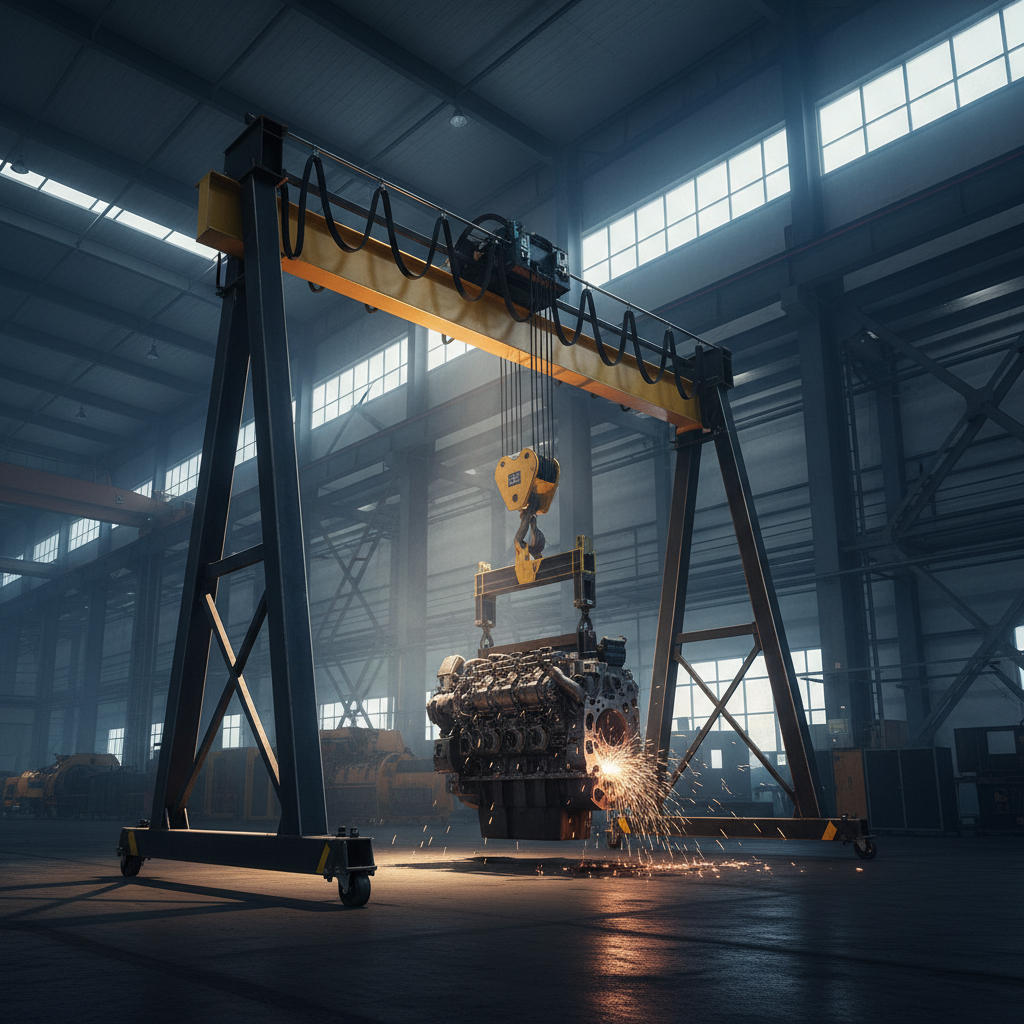
At its heart, a small gantry crane operates on the principles of leverage and structural integrity. The gantry structure, typically constructed from steel, provides a stable framework to support the lifting mechanism – often a chain hoist, wire rope hoist, or electric hoist. This allows for vertical lifting and horizontal movement of loads within a defined area. The design emphasizes load distribution and minimizing stress on critical components.
The effectiveness of a small gantry crane isn’t solely about lifting capacity; it’s also about maneuverability and adaptability. Many models feature adjustable height and width, making them suitable for various work environments and load sizes. This flexibility is a key differentiator compared to fixed overhead crane systems.
Defining small gantry crane and its Relevance
A small gantry crane is a type of crane characterized by its portability and relatively low lifting capacity. Unlike large overhead cranes which require permanent installation, small gantry cranes are designed to be easily assembled, disassembled, and relocated as needed. They typically feature a wheeled base that allows for movement along a designated path, and a hoist system for lifting and lowering materials.
Its relevance stems from a need for adaptable lifting solutions in environments where fixed cranes are impractical or cost-prohibitive. This includes workshops, warehouses with varying storage layouts, construction sites, loading docks, and outdoor work areas. They address the need for localized lifting tasks without major infrastructure changes.
In modern industry, the small gantry crane plays a vital role in streamlining operations and improving efficiency, particularly in sectors requiring frequent material handling and precise placement. From automotive repair to aerospace manufacturing, these cranes contribute to safer and more productive workplaces.
Key Factors of small gantry crane Design
Durability: A small gantry crane's ability to withstand repeated use and challenging conditions is paramount. High-quality steel construction, robust welds, and corrosion-resistant coatings are essential for ensuring a long service life. The selection of materials must consider the intended load capacity and the environment in which the crane will operate.
Load Capacity: This is arguably the most critical factor. Small gantry cranes are available in a range of load capacities, typically from a few hundred kilograms to several tons. Selecting a crane with the appropriate capacity for the intended application is vital for safety and preventing damage to the equipment.
Portability & Adjustability: Ease of movement and the ability to adjust height and width are key benefits of this type of crane. Features like caster wheels and telescopic beams contribute to increased versatility and adaptability to different workspaces.
Practical Applications of small gantry crane
Small gantry cranes find applications in a diverse range of industries. In manufacturing, they are used for lifting and moving components during assembly, loading and unloading machines, and positioning materials for machining.
Construction sites benefit from their ability to lift materials to elevated work areas, move scaffolding components, and handle pre-fabricated structures. Their portability makes them ideal for projects with limited access or changing layout requirements.
Comparison of small gantry crane Types
Global Use Cases for small gantry crane
In post-disaster relief operations, small gantry cranes prove invaluable for lifting debris, distributing aid, and establishing temporary infrastructure. Their portability allows for rapid deployment to affected areas, even those with limited accessibility.
In remote industrial zones, where access to large-scale cranes is restricted, these smaller units provide essential lifting capacity for maintaining equipment, handling materials, and facilitating construction projects. Their ease of transport and assembly makes them a practical solution for challenging logistical situations.
Benefits and Long-Term Value of small gantry crane
The advantages of utilizing a small gantry crane are multifaceted. Cost-effectively, they represent a significantly lower investment compared to permanent overhead crane systems. Reduced installation costs, minimal foundation requirements, and lower maintenance expenses contribute to a favorable return on investment.
Beyond the financial benefits, small gantry cranes enhance workplace safety by reducing manual lifting tasks, minimizing the risk of strain injuries, and providing a controlled lifting environment. They also foster operational flexibility, allowing businesses to adapt to changing production needs and optimize material flow.
From a sustainability perspective, their portability reduces the need for extensive site preparation, minimizing environmental disruption. Investing in a durable, well-maintained small gantry crane represents a commitment to long-term reliability and efficient operations.
Future Trends in small gantry crane Technology
The future of small gantry crane technology is poised for innovation. We can expect to see greater integration of automation and robotics, enabling remote control operation, precise positioning, and increased lifting efficiency. Smart sensors and data analytics will also play a crucial role, providing real-time monitoring of crane performance and predictive maintenance capabilities.
Lightweight materials, such as advanced alloys and composites, will contribute to increased portability and reduced weight, further enhancing maneuverability. Furthermore, the development of energy-efficient drive systems and the incorporation of renewable energy sources will align with growing sustainability initiatives.
Digital twin technology, creating virtual replicas of the crane for simulation and optimization, will also become more prevalent, allowing for improved design and operational strategies.
Challenges and Solutions
While small gantry cranes offer numerous advantages, challenges remain. One common limitation is ground surface requirements – uneven or weak surfaces can compromise stability. Solutions include using base plates to distribute weight or employing cranes with adjustable leveling feet.
Another challenge lies in ensuring operator training and adherence to safety protocols. Regular training programs, coupled with clear operating procedures and load limits, are essential for preventing accidents. Investing in cranes with built-in safety features, such as overload protection and emergency stop mechanisms, is also crucial.
Finally, maintaining these systems requires regular inspection and preventative maintenance. Implementing a scheduled maintenance program, including lubrication, cable inspection, and structural integrity checks, will maximize the crane’s lifespan and ensure continued safe operation.
Summary of small gantry crane Maintenance Requirements
| Component |
Inspection Frequency |
Maintenance Task |
Severity Level (1-5) |
| Hoist Chain/Wire Rope |
Monthly |
Visual Inspection for wear, lubrication |
3 |
| Wheels & Bearings |
Quarterly |
Lubrication, check for play |
2 |
| Structural Frame |
Annually |
Inspect for cracks, corrosion, and deformation |
4 |
| Control Panel |
Monthly |
Check for loose connections, proper operation of controls |
2 |
| Limit Switches |
Semi-Annually |
Test for proper function, adjust if necessary |
3 |
| Brakes |
Quarterly |
Inspect brake pads, adjust tension |
4 |
FAQS
Small gantry cranes generally range in lifting capacity from 500kg (1100lbs) to 5 tonnes (11,000lbs). However, there are specialized models available that can lift even heavier loads, depending on the design and materials used. The appropriate capacity depends entirely on the specific application and load requirements. It is crucial to select a crane with a sufficient safety margin.
The space requirement depends on the crane's dimensions and the swing radius of the hoist. You’ll need sufficient clearance on all sides for the crane to move freely and safely. Consider the height of the lifted load and any obstacles in the surrounding area. Generally, allow at least 1 meter (3 feet) of clearance around the crane's base and ensure a clear path for travel.
Yes, many small gantry cranes are designed for outdoor use, but it's essential to choose a model specifically built for that purpose. Outdoor cranes will typically have corrosion-resistant coatings and weatherproof components. You may also need to consider wind loads and ensure the crane is properly anchored to prevent tipping. Regular maintenance is especially crucial for outdoor cranes.
Essential safety features include overload protection, emergency stop buttons, limit switches to prevent over-travel, and a robust braking system. Look for cranes that comply with relevant safety standards (e.g., ASME B30). Proper training for operators is also paramount. Regular inspection and maintenance are critical for identifying and addressing potential safety hazards.
With proper maintenance and care, a well-built small gantry crane can last for 10-20 years or even longer. Regular inspection, lubrication, and timely replacement of worn parts are key to maximizing its lifespan. Factors such as the frequency of use, the severity of the operating environment, and the load capacity will also influence its longevity.
Key maintenance tasks include regular inspection of the hoist chain or wire rope, lubrication of moving parts, checking the wheels and bearings, inspecting the structural frame for cracks or corrosion, and testing the control panel and limit switches. Maintaining detailed maintenance records is highly recommended.
Conclusion
In conclusion, the small gantry crane stands as a versatile and invaluable asset across a wide spectrum of industries. Its portability, adaptability, and cost-effectiveness make it an ideal solution for diverse lifting and material handling challenges. Understanding its core principles, key features, and future trends is essential for maximizing its benefits and ensuring safe, efficient operations.
Looking ahead, continued innovation in automation, materials science, and digital technologies will further enhance the capabilities of small gantry cranes. Investing in quality equipment, comprehensive operator training, and proactive maintenance practices will ensure that businesses can leverage these advancements to achieve long-term productivity gains and maintain a competitive edge. Visit our website at www.daweihoisting.com to explore our range of small gantry cranes and find the perfect solution for your needs.